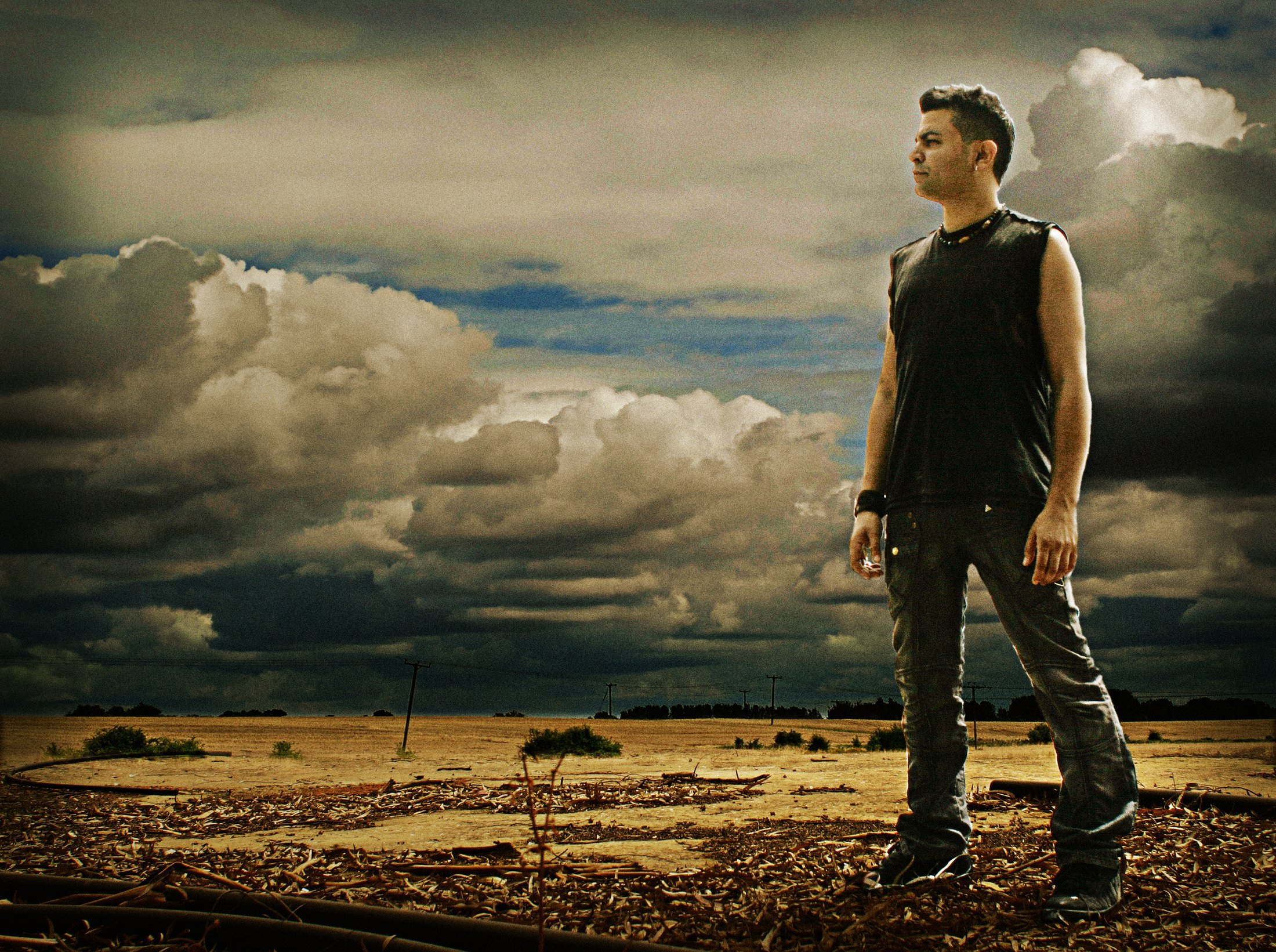

Yaniv Ben Ari, U-Recken, is one of the most respected veteran creators of Israeli psytrance: a Haifa native who started out in live bands before trance arrived, broke through in 2006 with his debut album Aquatic Serenade, and has since released albums such as Deeper into Man and Nothing is Sacred on the Belgian label Dacru Records, played floors and festivals across the world, and was among the founders of the Tree of Life festival. This year he marks twenty years of the project: a rerelease of the debut album, a world tour that has already brought him back to Australia, and a sixth album in the works.
The interview before you grew out of a conversation with Goldie, in voice messages, over a single night. Yaniv edited and approved the text himself, word for word, and it appears here exactly as he left it.
The Dream That Never Left Me: Live Music
Tell me about the period before trance. What has stayed with you from back then that you want to return to?
That whole period before trance was full of live music, and it feels to me like something I never fully exhausted. It’s true that I did start playing in bands and performing at an early age, and I’m very glad about that, but my biggest dream is to perform live with a few other musicians. Honestly, I don’t care what style of music it is. It’s something that stayed with me from that time, and I miss it a lot.
Is there one show from that period where you felt on stage the connection you miss today?
There’s one show I just now remembered. I was eighteen and traveling abroad for the first time. I started with Amsterdam and went on from there to England. In Amsterdam I went to a pub with the people I was staying with, and the band playing there was missing a guitarist. I hadn’t planned it at all, I hadn’t prepared for it, I just got up there spontaneously. I don’t even remember what we played, but that feeling of confidence on the instrument, and it was a really good session. That’s something that always lifts you as a musician: you have confidence on your instrument, you get up, you play, and you have a good time. I remember it very fondly. That connection, playing live music in front of an audience, there is nothing like it. In my opinion it’s far more powerful than standing there with a USB stick or a laptop and playing tracks.
Do you remember the exact moment in that session when you knew: I’m in, this is working?
Yes, it took a few minutes. It mostly showed in the looks from the other players, nodding to each other and saying, cool, this guy knows what he’s doing. And from there we just played about two and a half hours of all kinds of rock classics and improvisations, and it was really fun.

Reading the Dancefloor, Not Playing What’s Expected of You
When was the last time a dancefloor gave you that same wordless approval, that feeling that they’re with you?
A lot of people don’t know this side of me, but I’m a very chronic collector of music and media. I’ve actually built a system where everything is catalogued, and I really can throw myself in at the deep end and play whatever style I want. The last time something out of the ordinary happened to me on a powerful dancefloor was at Orin Aya in Australia. I played the after there, once the main stage had closed, a four hour psychedelic house set. And it was just insane, absolutely perfect. They invited me to play that style of music again a month ago, that’s how good it was.
What connects me most to audiences is my intuition, which for a long time now has worked as a tool of the trade for me and not just a gut feeling. It doesn’t matter whether it’s a hundred people or three thousand: knowing how to read the moment and give the place what it needs, and not what’s expected of you to play. That also takes a bit of artistic courage. Another place where I have that connection is Richard and Archie’s parties. The crowd there isn’t big, but we always play long sets and it’s always very versatile. I can play whatever I want and somehow it always works well. It’s the thing I love doing most. Beyond being an artist who creates, I’m also a DJ, and that passion is no smaller.
“knowing how to read the moment and give the place what it needs”
Take me to one moment in that set in Australia where you read the floor and changed direction. What happened there?
We have an old friend in Australia named Dwayne, Player One. Both Richard and Gil from Cosmic Flow know him, and in the original plan I was supposed to play from twelve noon until four. I woke up late that day and told myself that I felt I needed to sit with the music a bit and sort out what I was thinking of playing, because I could feel that tension building, that little bit of stress that gets to you before a set. I simply asked Dwayne if we could swap slots. He went on before me and I went on at four. In that time I got ready, I worked in the tricks that felt like the best fit, and then I just hit play, and the first track simply rolled and worked. And it was amazing.
The System Behind the Catalogue
You said you built a system that catalogues all your music. What was the moment you realized a collection wasn’t enough for you anymore and that you needed a method of your own?
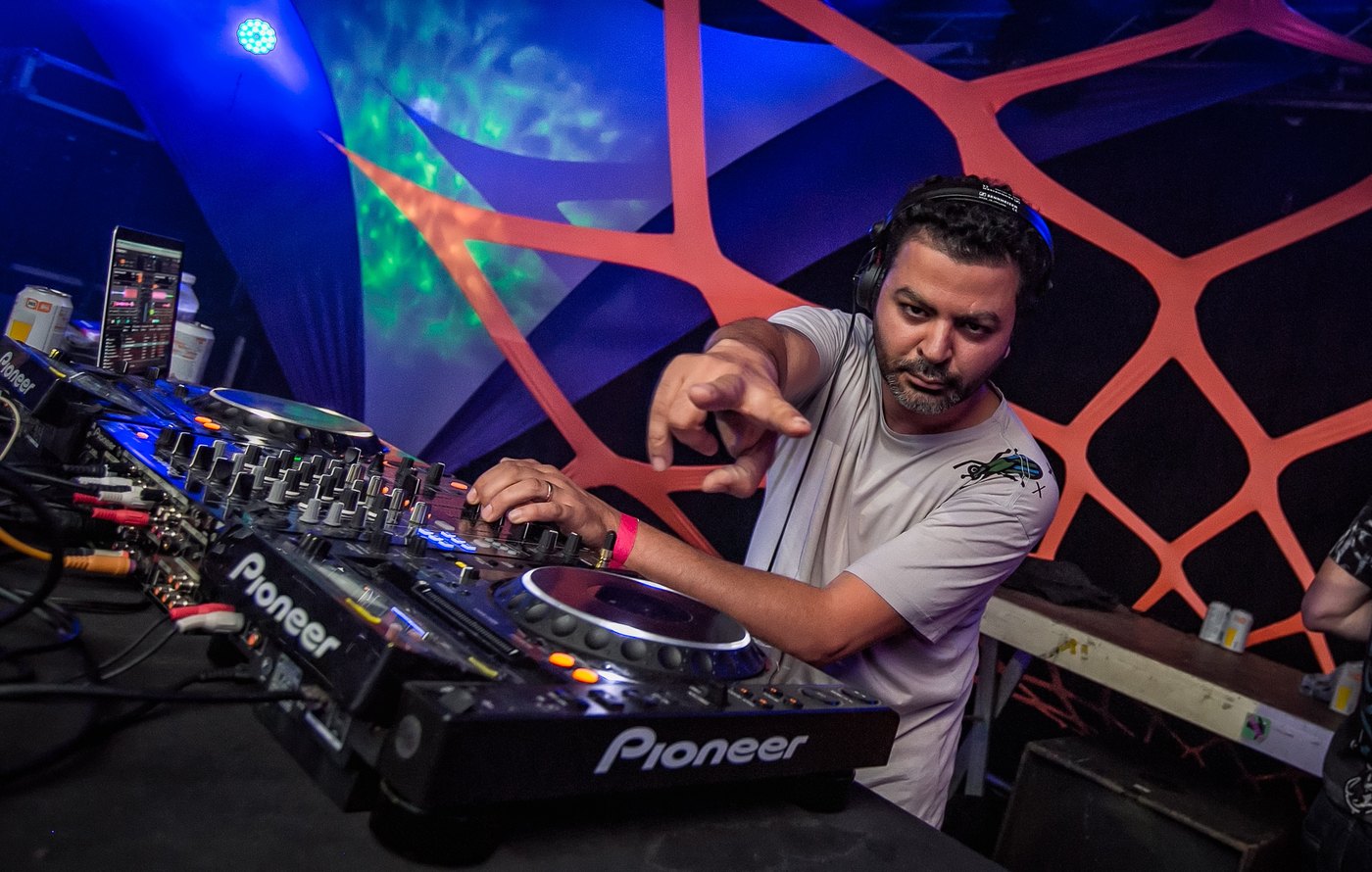
That’s a really excellent question. The need for a system is something that exists in every area of life. The moment you have a system, it’s much easier to move around and be efficient. And once you start getting into the world of collecting music, and it branches out into genres and styles, if you don’t know how to put it in the right place from the very start, by key and by energy, then when you need to pull it out it’ll be very hard, you’ll start digging around inside folders and you won’t know what’s what. There’s an existential need here as a DJ, to work with a system that helps you pull out what you need quickly. I’m very proud of this system I built. I also teach it at our academy at BigFreq, and it has served me faithfully to this day.
Do you remember the first time you saw this method working for a student, and not just for you?
The whole area of professional teaching really shifted up a gear for me, mainly over the past year, and I try hard not to load myself up with large numbers of students. But out of the handful of students who did go through full training with me, and who I shared this catalogue with, they simply report that it’s the most logical way to consume music. The way they use it isn’t necessarily for DJing, it’s more as a reference against their own studio productions. If I’m producing a track now at a certain BPM and in a certain key, I want to bring in the closest reference to what I’m creating so I don’t get lost. Not in order to copy, but so I don’t get lost sonically. In that context they thank me for it again and again.
A Sixth Album: Twenty Years, No Apologies
After twenty years, why did now in particular feel like the right time to open it up again?
I think the question isn’t phrased correctly. I’m not reopening my first album after twenty years. I’m putting out a completely new album, my sixth, that sums up twenty years of work in this field. I really do feel this twenty year milestone as an artist, and I’ve been through a huge amount in this stretch of life. A lot of successes, a lot of failures, and it all funnels into this year. Many of these things I pass on to my students, whether it’s technical things, whether it’s mindset, or real ways to make a living as a musician. Because the first thing that shuts down in every crisis, here or anywhere in the world, is our field. So you really have to be realistic and know how to earn a living from the things we love, and to actually be able to pay the bills, because without that the joy of creating won’t be there. All of these things funnel into this special twenty year milestone. Happily, I’m part of an amazing team of people at BigFreq, and I have complete freedom to create the content, the courses, and the products that really reflect all of that experience, and anyone who studies with me knows how much value there is there. And as far as I’m concerned, this album is going to be something very special. Very current, less prettified, less posturing about what will work, and more about what I feel today after twenty years in this field.
What was the moment you decided this album would tell the truth of who you are today, without calculating what would “work”?
Again, a very good question. A lot of people don’t talk about this, but Israel’s situation in the world today, after October 7th, is not a good one. We’re automatically filed under some false narrative. Personally, that doesn’t put me on the defensive. It puts me in a place where I very much want to say something, in a way that can’t be read two ways, that doesn’t apologize. I think I’ve always done that in my music, but this time it really reached the level where I simply have no interest in getting more gigs. That doesn’t interest me anymore. What interests me is the music, pure. I don’t care whether it works on the dancefloor. I care that people hear it and that it makes people talk. And that, I think, sums up the concept of this album.
The Discipline That Replaces Inspiration
Take me to the first session where you stopped thinking about the dancefloor. What changed in your work in the studio?
I don’t think anything changed in the way I approach creating. I don’t believe in muses and motivation and all that kind of thing. I simply believe in sitting down and letting things happen. And what makes me want to listen back to that track afterwards and say, “wow, this is something I stand behind”? That’s what interests me. That the music should be something you can still listen to ten years from now and it’ll still be relevant, still be interesting and special, and less about what works right now on a dancefloor in Brazil or in Germany. That never interested me, and thank God there’s enough music out there to choose what to play and what suits which place. In my own personal catalogue too, I’m versatile, from progressive all the way to night music. I have everything. It’s simply about sitting down and doing it. Wonderful things happen when you don’t rely on inspiration but let the universe do its thing.
You’ve written about the festival collapse in 2017 and the years of debt that followed. Inside that period, what helped you keep sitting down and doing the work?
Out of that collapse came things whose value, in hindsight, is priceless to me. I learned skills I’d been missing, and today I find myself in a position where I don’t depend on anyone in order to express myself, because at that moment I understood that I could no longer rely on gigs alone. And while I was building myself up in new worlds, obviously the music got pushed aside a bit. But what made me stay was the core of my fans, the people who really love my music and are connected to it. Every few days you get a message from people telling you, “your music lifted me through the hardest periods of my life.” There are a lot of messages like that, and it makes you realize that you have a responsibility toward your core of fans, however small or large it may be. That’s what really kept me from stopping. And after 2017 there was also COVID, so the music got pushed aside again quite a bit. The audience turned over as well, so it worked out that I faded from the general consciousness, but as far as I’m concerned that’s completely fine.
Out of all the messages you got in that period, which one has stayed with you to this day?
There’s a guy from Ma’ale Adumim who’s also named Yaniv, and he suffered a stroke. His brother contacted me and sent me a video and photos of him sitting in a wheelchair in front of a TV screen with one of my albums on in the background, and said that he talks about me all day, and that the only thing that calms him is my music. So they keep it playing in the background for him all the time, and he asked whether I could come and visit, and unfortunately I never got to do it. That’s something I’m still annoyed at myself for not doing. But yes, it’s very moving, that a person who has had a stroke is being healed by the frequencies that came into being through me. To me that’s very powerful. There are a lot of stories like that, of people who went through mental health crises and say that my music helped them. That’s the most recent story that has really stayed with me.
Choosing Home
At which show this year did you feel that a new audience was really meeting you?
That’s a slightly amusing question, because on every dancefloor I play now exactly the same thing happens. You see the looks on people’s faces, surprised looks, as if they’re hearing something they haven’t heard before, a delivery they didn’t know, and they ask me, what’s your name, who are you, where did you come from. In a good way, of course. They enjoyed it a lot, they just didn’t know who I was. It’s a little amusing, and for me it’s sort of unimportant. Again, I have to point this out: the desire to go back to being known and famous and to be in that all day long is no longer a place I experience as a need. I feel more comfortable “behind the scenes,” busy with the things I do, working mainly from home. I’m around my family a lot, and that’s what’s good for me. I love it. If I have to fly somewhere now, it’s a kind of hassle that I swallow and do because every now and then you have to, there’s no way around it, and I also love it once I actually get to the party, then I enjoy myself and I play and I feel good. But it’s not something I wake up hungry to do. Whoever is going to know my music will know it, and whoever doesn’t, there’s enough music in the world, it’s all fine.
What small moment at home makes you feel you chose right?
I’m really a home person. I think the biggest turnaround on the home front was when I simply dismantled my studio and sold most of the gear. I had a huge number of synths and machines, and it was a kind of genuine obsession. Even when I was in a financial crisis I didn’t stop buying, it was sort of a business where you buy cheap and sell high, the gear was constantly turning over. The studio was a very organic place, but it was located outside the house, and I’d spend a huge number of hours there. Even when we were living in the big house, the studio was outside the house, and I’d really spend most of my time there and fall asleep on the couch, coming out only occasionally for meals. I was like a guest in my own home. What changed is that after I sold all the gear, I simply moved to working from home. I have a setup with a very powerful computer and a few screens, and I do everything there, music included. I work with headphones, and it feels really good to be inside the house, to get up, to cook, to go out with the kids, to come back. I don’t have to choose between the studio and home. That’s something I didn’t think would happen. I think the next time I have a studio will really be after we settle into our final house. The kids will already be grown and out of the house, so I’ll have that freedom to disappear again. But now isn’t the time for that, right now my kids are little and they need me. I never thought about this choice or said it out loud, but I think that choice I made without thinking about it at all, that’s the small thing that makes me choose home.
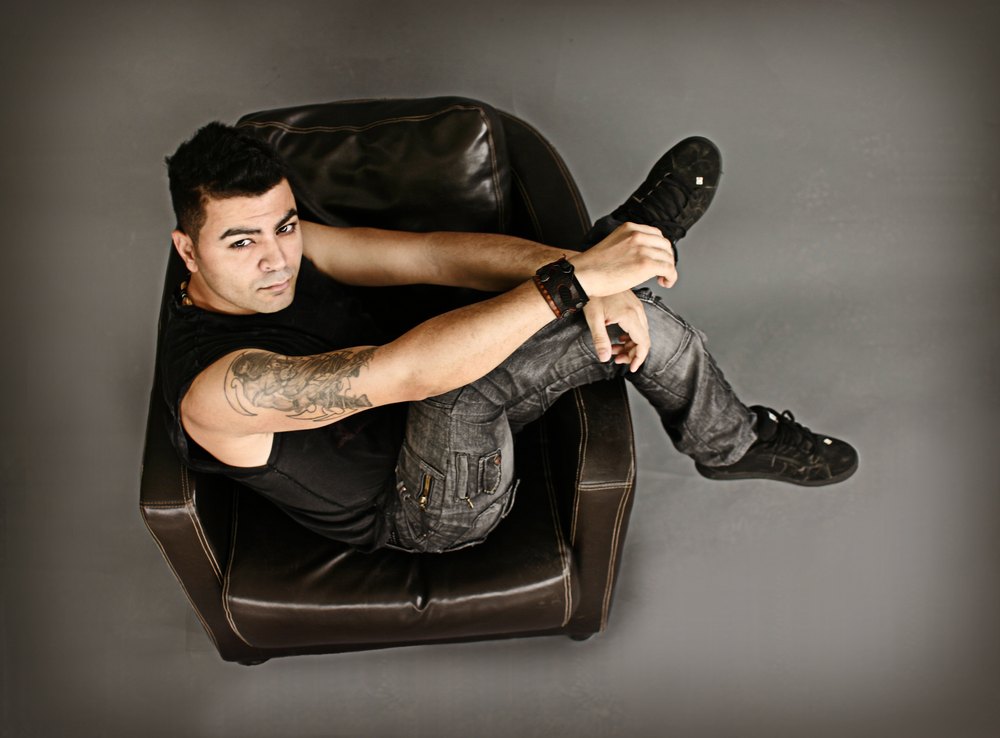
“I was like a guest in my own home”
When one of the kids comes to you in the middle of a session these days, what happens?
It depends on the severity of the incident. Usually they come to ask questions or to ask for small things, and then I just answer them without getting up. We always make sure there’s food on time, so there’s no need to deal with those things too much. And when the kids need to get out a bit and get some air, that’s simply the moment to take the headphones off and get up, and to move myself around a little too. I can sit for hours upon hours, but I feel my kids the way I feel a crowd. That’s how I know when they need me, and I try to be present there as much as I can.
“I feel my kids the way I feel a crowd”
SHALYO: Seeing Someone Take It With Both Hands
What was it in his first message that made you stop and answer?
SHALYO is the ultimate student. We got in touch in the most professional way, we have a professional relationship, he’s my student and I’m his mentor. At the beginning, when we met, I usually do an introductory call with students to see what their need is and whether there’s a fit, whether I can really give them what they need before they commit to a program and pay. The one on one program I run is six months, fairly intensive. You take a person with some unclear vision and solidify it into a precise vision, and from there you build the brand, the infrastructure, the networks he needs, the website, the domain, everything. SHALYO is an example of excellence. This guy simply took what I taught him with both hands, applied it, and it’s just a pleasure to see what has become of him. I’m sure he’ll go far, he has both the technical intelligence and the emotional intelligence. Again, I don’t take on many students, it matters to me that there’s some chemistry, and that I really feel I can give this person the transformation he needs. SHALYO is one of the students I’m most proud of, and I’m glad he’s playing with us at the upcoming party.
When SHALYO’s name appears next to yours on the same lineup, what does that mentoring give you back?
Seeing SHALYO on the flyers and the invitations is the next logical step. I think this guy is a monster, and he’s genuinely devoted to his craft. He’s also someone who is holding down a family and a career, and he’s very realistic. But when he sits down, he sits down with intent, and I expect to hear more and more from him. I believe in him a lot, and for me that’s a satisfaction. I’m very happy to see him, and I hope to see him as much as possible. He really deserves to succeed.
What Still Moves Me
When you get up to play today, what still moves you the way it did at eighteen in that pub in Amsterdam?
At eighteen that was a kind of peak of one world I was in, the world of guitar and live music, and from there it moved to electronic music, which is a completely different world. But what makes me feel the way I did then, and I can still describe it today, is the feeling that you’re a channel for cosmic energy. You’re in a place, there are other people, and you’re passing on energy that connects everyone. A kind of positive energy bomb is created that echoes out into the universe. That’s not something that passes me by. I’m aware of it, I feel it, and I act out of it. And that’s what makes me do what I do. I simply love it. I think music is the highest level of expression, and the best way to have an impact. Through frequencies we’re affected at the highest levels, we can bring about nothing less than miracles. And the moment you act from that intention, the universe naturally helps you and makes sure everything happens the way it should. Thank you so much for the interesting conversation, I can’t wait to see you all at DJs on Gold, and it’s going to be amazing. See you on the dancefloor.
See you on the dancefloor at DJs on Gold 🌞