The Drum Kit in the Room
Before there was an alien, there was a drum kit.
Alon Abramov was fifteen, listening to rock and drumming at home. “I had a drum kit, I used to drum,” he says. And at about the same age something moved: “At around fifteen I started connecting to electronic music and building myself a sort of little studio at home, getting more into keyboards and things like that.”
He does not remember one track that lit the fuse. He remembers why electronic music in particular, and it sounds like an explanation about an instrument when it is really an explanation about a voice: “In electronic music a person who loves to play can express himself, because he is not a singer. Because I’m not a singer, so I know how to express myself by playing.”
And then, in the middle of the sentence, he corrects himself. He starts to say that the sky is the limit, stops, says “sorry”, and turns the phrase the other way round:
“There is no limit to the sky.”
Remember that line. It will come back.

Nostradamus with an S, Nostradamuz with a Z
“It’s a long story,” he opens. “I didn’t start out as an alien.”
The project was born under the name Nostradamus, with an s at the end, like the astrologer. When the time came to release the first album, the label stopped him: “My label argued that the name wasn’t good.” The reason was entirely practical. There are already plenty of projects by that name, and finding him on social media “would take a long time”, and “they preferred something catchy”.
So the name changed, “with my agreement of course, together”, to Nostradamuz with a z. And along with the last letter, the character changed too:
“We decided it’s the biography of an alien, not of an astrologer.”
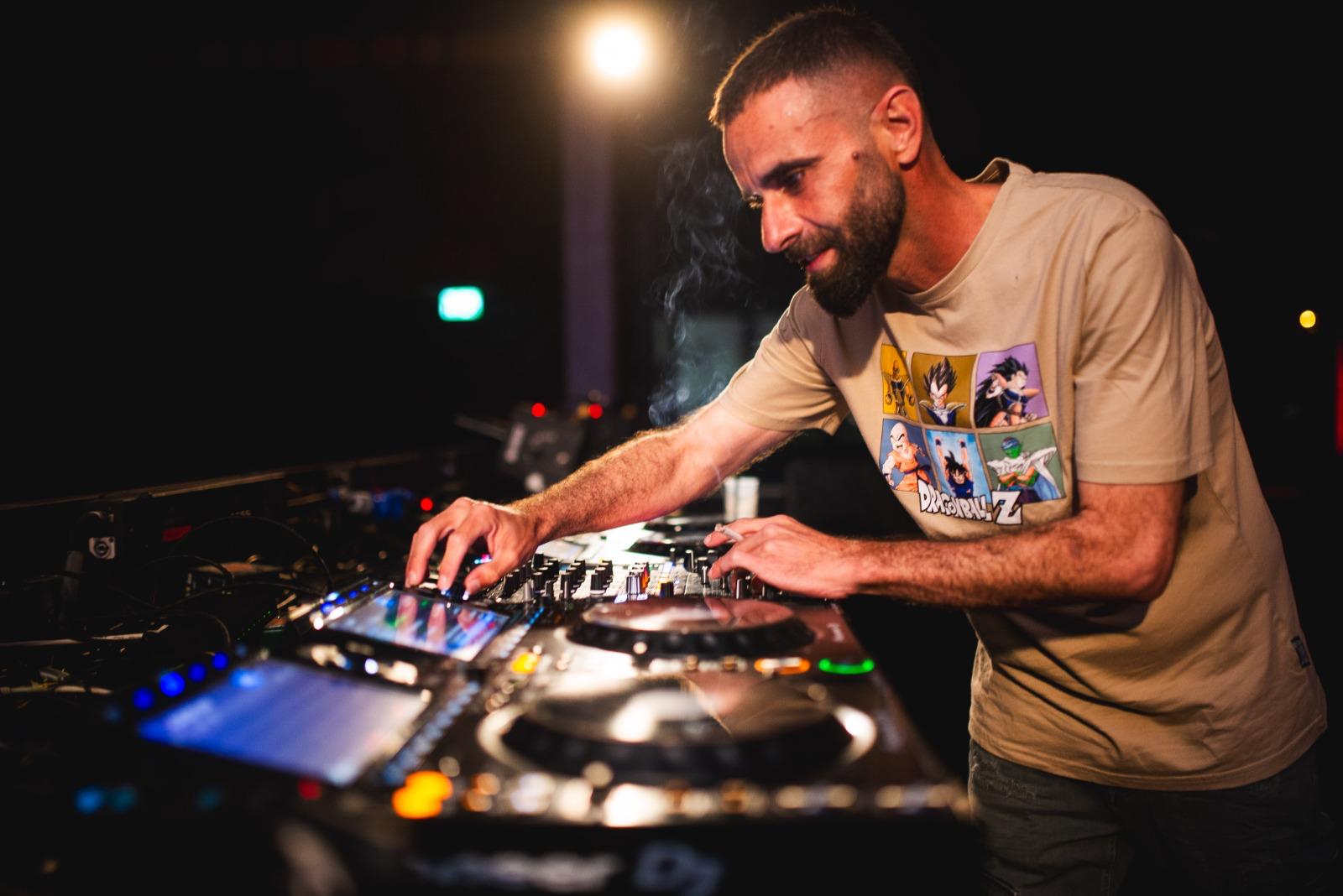
A purely commercial decision, and it opened up a whole world. Ever since, the character has done exactly what a good character is supposed to do: it needs no face, because people recognise it by its sound.
“It feels like I have a sound signature of my own,” he says, and the proof reaches him from the dance floor. People recognise his music even when somebody else is playing it: “People film it and send it to me and tell me, this one’s yours.” A track called Nostra came back to him in videos from dance floors before the second album was even out. “They picked it out with other DJs who were playing it.”
“Instead of Paying for a Master, Go and Pay for Lessons”
The road to the label began about four years ago, when he wanted to put out the first album and approached a few labels. One of them, Enterrec, a psytrance label out of London, “simply saw that there was something interesting here”.
“The music just interested them, and I connected with the right people. And that’s how it came out.”
But the yes came with a reservation: the label said the album needed more work, and he agreed. “I understood that I needed to do more mix and master work, that as a musician I dealt less with mixing and mastering. I dealt with making music, not with sound.”
And then, instead of paying somebody to do the work for him, he went and learned it. A good friend of his, Leon Gorzalow, whose stage name is Originals and whom Alon describes as “one of the strongest in the country”, answered him in a single sentence:
“Alon, instead of paying for a master, go and pay for lessons.”
He sat down and learned to mix and master while he was working on the first album. The second one he brought to a high level from the start, “so that I didn’t need a mix and master. I only needed a final master”. And it did not stay a technical matter: “It also lifted my musical level, the moment I learned it.”
The Tribe’s Clicks, and the Album That Was Almost Called Rose
African Click is, in his words, “one of the strongest tracks on the album”. The name came out of an African tribe whose sounds he recorded: “They make these clicks with their mouths. It’s like the sound of corks popping.” From there began a long stretch of editing, “getting it to a level where you can play it properly inside a track”.
And the album itself was almost called something else. He has a track called Rose, and he meant to name the album after it. The label went for the other one instead: “He said to me, does it bother you if I change the name from Rose to African Click?” He did not object. “The truth is I quite liked that track.”
And with him a track is never really finished. “Every track is something I get excited about all over again,” he says. “It’s always something new, it’s a new baby.” Even after it is out, he goes back to it: “I release a track and I go back to working on it, I play it and go back to working on it.”
Where does the decision to go back and change something come from? In the past, he says, it came from one very particular place. “I used to like taking acid,” he says, and clarifies it himself: “Acid is LSD, yes. These days I don’t touch it any more, but it used to open up my senses.” He would hear a track of his playing, “and suddenly something in my head goes off”, and go back to the studio to rework it.
The Alon Behind the Alien
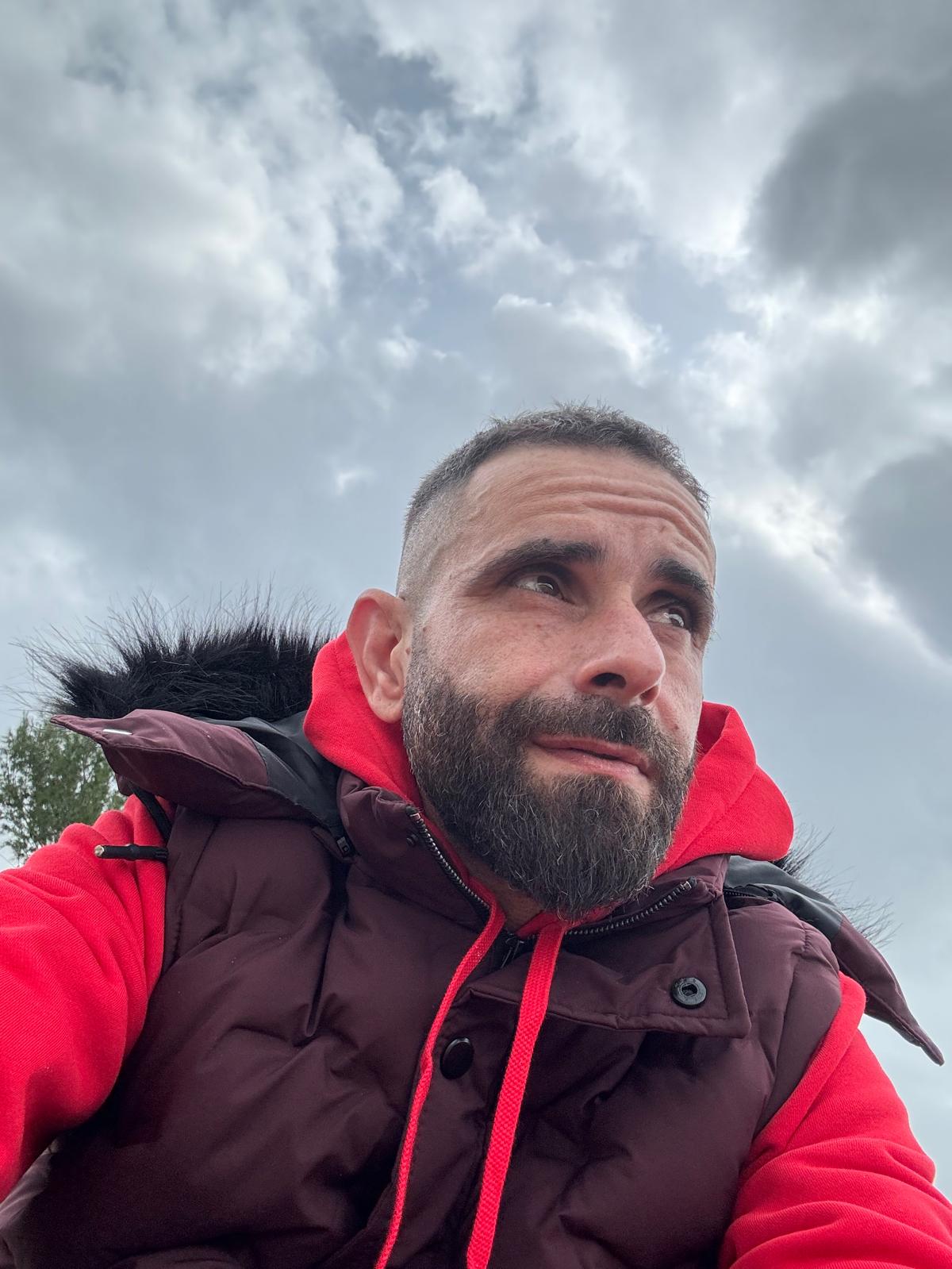
He is forty five, and a father of four. The eldest is twenty one, “nearly twenty two”; after her a nineteen year old who is serving in the army; a sixteen year old boy; and the youngest, twelve, who celebrates her bat mitzvah the week after this conversation.
His day sounds simple: work during the daytime, then home, then the studio. “I don’t always have time to sit down, but I try to clear the right times for myself to sit in the studio.” In the end he sums the whole thing up in four words: “Home, work, kids and music.”
And what gets him into the studio after a day like that?
“It’s a kind of release,” he says. “Sometimes even if I’m a bit sad, or I’ve been through something that wasn’t fun or wasn’t pleasant, the studio is the thing that brings me back to a smile. The instruments are my outlet.”
“I’ve written music in every state there is. Whether it was writing music in tears, crying, or writing music laughing, smiling, cheerful, happy, sad, I’ve been through every state inside that studio. There were even days when I’d be writing music and shedding tears while I did it.”
Niko
There is one track that takes him straight back to the moment it was written, and it is also the first track on the second album.
He started it before the first album and skipped it when that album came out, simply because he wanted to work on it more. “It’s a track I wrote after I went through a divorce, and it wasn’t an easy divorce,” he says, “and it’s one of the first tracks I wrote in the Nostradamus project.”
And then time did its work. “And when my mother passed away I carried on working on it.”
“My mother passed away about two weeks before the Nova party, and before October 7th, and then there was the pain of my mother and the pain of October 7th.”
“It’s a track that was written in pain.”
The name itself came from Anton, a good friend of his who was murdered at Nova. At first the track carried a doubled name that Alon made up for it, “sort of like Coca Cola”. And Anton had a nickname: “I was always calling him Narco as a joke, he was a stoner, an acid stoner, and I’d call him Narco Narco.” He did not want to call the track Narco. “So I shortened the name to Niko.”
Today, when he plays it, Anton is there: “When I play it I also think about him dancing on the floor, and he’s with me, and he’s there.”
“Whenever I was down I’d open that project on the computer and work on it,” he says. And on the day Anton died, “I think I worked on it at absolute full throttle”.
“It’s something between me and myself.”
The Party That Was Shut Down, and the One That Was Not
Three years ago he produced a birthday party for himself. “A production for a party of close to a thousand people, and the police shut it down on me and wouldn’t let me carry on.”
This year, on February 3rd, he did it again, and this time it was both a birthday and the launch of the second album. “It was a really beautiful party. A party of seven hundred, eight hundred people, a grown up, good looking crowd, and I had a great time.”
As far as he is concerned, that success was not a given. “Unfortunately, in the state of Israel, I think this is one of the countries where the community and the scene and the artists are among the strongest in the world, and the police here don’t let us do anything and keep shutting things down.” This party too, he says, could have been shut down. “I just took a risk, and it was, as they say, me and God. God willing we’d make it, and we made it. I got through it safely.”
And how did it feel when it was over?
“It filled my body with air. I simply had a great time, because I pulled it off. I pulled it off with all the mess of police who don’t allow anything, and I simply pulled it off.” By the last hour of the party, he says, he already knew: “Even if they shut me down, I’ve succeeded.” It was a Saturday after party that ran all day long. “Everybody wants to succeed at something in life, and here we give thanks to God.”
Quietly
In Israel, he says, he has not yet played parties of more than a thousand people. There is one exception: his own production.
“My production is called Quietly, and as far as I’m concerned it’s the production I have the most fun playing at.”
It started about five years ago at the Sea of Galilee, before it was a production at all: friends, groups of friends, parties of a hundred people. And then one day it blew open: “Suddenly five hundred, six hundred people turned up to a beach on the Sea of Galilee and started dancing, and people started showing love and appreciation.” Ever since, at every party he throws, they come.
He gives the reason he built it without softening it:
“Because I saw that people weren’t really giving me a stage.”
“I felt there was an audience here that loves hearing me and an audience that wants to hear me, and I felt that this audience wasn’t being allowed to hear me.”
And why not? “The problem here in Israel is that it’s all connections, friends of friends, and if you’re not a friend of friends.” He does not finish the sentence. He moves straight on to the next one:
“I’m a person whose friends are my kids, my home, my studio. Those are my friends.”
He does not go out much. “My nights out are more in the studio. The fact that I’m at parties is because I play at parties.” Until the big productions in Israel, Unity, Dof and Indigo, open the door to him, he has the dance floor he built himself.
And he is already hearing it from other promoters too: many of the people who have booked him to play told him they felt a lot of the crowd came specifically to hear him.
“I hope the day comes when people open their ears a little and see that there’s someone here it would be a shame to miss, someone who should be given a few stages, and I think I deserve it.”
No Set Prepared
So what happens on August 7th? The answer starts with a declaration:
“I never think about how I’m going to build the set, because I never come with a set prepared either. There’s no such thing with me, no such thing exists with me.”
What he does do is arrive early. “I usually like to come a little before the set. To see the crowd a bit, to feel it, to hear what it connects to.” What is he looking for out there? “Usually I try to look for what the crowd gets excited about, where I hear them enjoying it more.”
Trance, he explains, is a whole world of styles. He plays mostly psy progressive himself: some tracks lean one way, others the other, and some sit in the middle. “Usually an older crowd likes the progressive more, the depth. A younger crowd likes the psy more, the breaks, and I usually make combinations of everything together.”
And where does it actually start? “As they say: from the gut, from the head, from the heart, from the soul. I try to work out how I climb with them and climb with them and bring them up to a height where they’ll just say wow.”
He dreams of reaching the two festivals almost every trance artist dreams of: Boom Festival and Ozora. But his answer does not stop there. “Right now I only play in my own country, in Israel,” he says, and immediately adds what he himself calls the biggest truth of all: “I really love playing here, and I’d want to reach big festivals in Israel more than abroad.”
And at the end we asked him what he would say to the fifteen year old Alon, the one with the drum kit in his room, if that boy were standing beside the dance floor today, watching NOSTRADAMUZ.
“I think I’d stand in front of the speakers and say wow, and thank you.”
“It took me so much,” he says. “I’m forty five today. And as a fifteen year old kid, if I’d heard the level I’m at now, I’d have been staggered. I’d simply never have stopped listening.”
Thirty years between the boy standing in front of the speakers and the man standing behind them today. And what he said about the sky, he says about the road as well:
“I believe everything will be all right in the end.”